

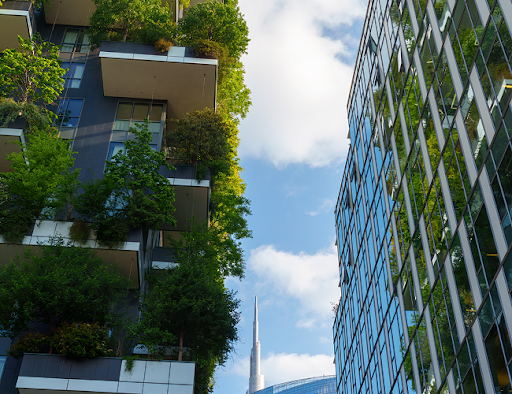
For decades, the real estate market learned to present value through three answers: where it is, how big it is and how it was built. Location, floor plan and finishes remain decisive, but they no longer fully explain why some developments become desired, stay relevant and build a superior perception of value. This is where Wellness Living comes in, adding a fourth dimension to the equation: what it is really like to live in that place.
This shift seems subtle, but it changes the entire logic of the real estate product. An apartment can have sophisticated materials and still make the daily routine tiring. It can offer many common areas that are hardly ever used. It can adopt digital features without simplifying basic tasks. It can also promise quality of life while delivering noise, thermal discomfort, inadequate lighting and few spaces able to support rest, concentration or social interaction.
Residents do not experience a development as a sum of items from the sales brochure. They perceive a continuous experience, formed from the moment they enter the spaces through to how they receive a delivery, work, rest, use a service, move through the common areas or solve a problem. It is in this reality, often invisible in launch images, that the promised value is confirmed or disappears.
That is why the debate on the future of housing is moving from property as an object to property as an experience. This transition brings together trends that once seemed to belong to different worlds: subscription housing, proptechs, branded residences, senior living, architecture for well-being, residential hospitality and healthy building certifications. All of them respond, in their own ways, to the same question: what must a development deliver when living well means more than occupying a space?
Wellness Living is not a list of amenities
Wellness Living is an approach to real estate development and operation in which spaces, services and the user experience are organized to support people's health, comfort and quality of life. The concept is not limited to having a gym, spa, pool or landscaping. Its focus is on how the development really takes part in everyday life.
This definition matters because the market quickly adopted the vocabulary of well-being, not always with the same depth in delivery. The garden may exist only as scenery. The coworking space may appear on the floor plan but offer no adequate privacy or lighting. The gym may occupy a closed, uncomfortable room. A shared area can be visually attractive and still not encourage real encounters.
Wellness Living begins when the development stops asking only which spaces it should have and starts investigating which experiences it needs to make possible. The difference lies between installing a gym and truly encouraging a healthier routine; between including vegetation and creating daily contact with nature; between providing an app and effectively reducing the friction of residential life.
According to the Global Wellness Institute, wellness real estate refers to built environments under the Wellness Living philosophy that are intentionally designed, developed and operated to support the whole health of occupants, visitors and communities. The presence of operation in this definition is as relevant as design. A healthy building depends not only on what was drawn, but on how its spaces, policies and services keep working after occupancy.
This view moves well-being from a decorative layer to a product strategy. Health, comfort and convenience stop being independent attributes and come together as a single housing proposition.
With Wellness Living, the market no longer sells only square meters
The shift can already be seen on different fronts of the real estate market. Branded residences add a brand, an operation and a standard of experience to the property. Senior living organizes housing, support and social life to meet the specific needs of an aging population. Coliving combines personal and shared spaces for audiences that value flexibility and community. Proptechs simplify contracts, services and relationships through technology.
These models are not equivalent, but they share one characteristic: the product does not end at the unit.
The growth of branded residences illustrates this appreciation of experience. Data from Savills indicated that, in 2024, residential properties associated with brands achieved, on a global average, a premium of 33% over comparable unbranded properties. The figure should not be read as an automatic formula for appreciation, but it shows that buyers are willing to recognize value in elements that go beyond construction, such as service, trust, identity and operational consistency.
Wellness real estate is advancing along similar lines. The Global Wellness Institute reported that this market reached US$876 billion in 2025, after average annual growth of 23.6% since 2019. More relevant than the absolute scale is the direction of the movement: the institute describes a move from aspiration-based projects to evidence-driven models, and from lists of amenities to integrated systems that support the way people live, interact and age.
This explains why the discussion about living well has become strategic. It is not just about following a consumer trend, but about recognizing that resident behavior has changed.
The home has taken on functions that used to be more separate. In a single day, it can be a home, an office, a place to rest, a social setting and an access point to a range of services. The more activities are concentrated in the residential experience, the greater the impact of acoustics, light, temperature, connectivity, privacy and the organization of spaces.
At the same time, residents and users have become used to handling important parts of life through simple platforms. Mobility, food, finance and entertainment now offer fast, personalized, digital answers. When the housing experience remains bureaucratic, fragmented or unresponsive, the gap between expectation and delivery becomes evident.
Living as a service changes what is expected of a development

Living as a “service” does not just mean replacing a traditional contract with a subscription. It means organizing property, management, services and relationships as a continuous experience.
In the conventional model, most of the intelligence is concentrated in conception, construction and sales. After delivery, the product is managed by structures that did not always take part in the earlier decisions. The result can be a mismatch between the architecture as designed, the possible operation and the real life of residents.
But when housing is conceived as a “service”, or multifamily, occupancy is no longer the end of the journey and starts to produce essential information about product performance. Which spaces are used most? Where do difficulties arise? Which services save time? Which areas stay empty? What generates satisfaction, discomfort or recurring complaints?
This movement broadens what is expected of a development. As well as simplifying everyday life, it must offer spaces able to sustain comfort, health and quality of life. This is the point at which Hygge signals a greater transformation: the new way of living begins to integrate operation, technology and services with technical strategies for well-being and environmental quality.
In the new way of living, the residential experience begins before the interface
The discourse on real estate innovation tends to favor what can be seen or demonstrated quickly: apps, digital locks, automation, smart furniture and on-demand services. These features can improve the routine, but the residential experience begins at a layer beneath the interface.
It begins when morning light enters the bedroom without producing excessive heat. When noise from the common areas does not invade the unit. When a workspace allows concentration. When circulation flows. When there are incentives to walk, use the stairs or reach outdoor areas. When residents find places to interact, but can also withdraw.
These attributes do not usually have the same visual impact as a lounge, but they determine the quality of use over time.
There is a useful analogy with the hotel industry. A guest may be enchanted by the lobby, but their final assessment will be influenced by the quality of their sleep, the silence, the room temperature, the efficiency of the service and how easy it is to get what they need. Aesthetics create expectation. Performance confirms the experience.
In residential, this relationship is even more intense, because the contact does not last a few days. It repeats for months or years.
When convenience and well-being come to form a system
A development guided by Wellness Living does not need to offer everything. It needs to understand precisely what it intends to improve in the resident's life.
In a compact unit, for example, the value of shared areas increases. This requires more than multiplying spaces. A coworking space must respond to different levels of concentration and interaction. The laundry must be accessible, easy to understand and prepared for demand. Shared areas should encourage encounters without creating acoustic conflicts. Outdoor spaces need to be part of the real flows of the place.
Operation is responsible for keeping these spaces available, organized and easy to understand. Technology can make booking easier, control access, communicate schedules or track requests. The design must ensure these spaces are comfortable, safe and suited to their use.
When one of these parts fails, the experience fragments.
Consider a residential gym. The design defines location, dimensions, ventilation and materials. Operation determines opening hours, maintenance and rules of use. Technology can organize access or provide information. A well-being strategy connects all of this to a larger goal: encouraging movement and physical activity in an accessible way.
The same reasoning applies to food, mobility, mental health, social life and rest. Wellness Living arises less from the number of features and more from the coherence between intention, design and use.
This is the main reason why convenience and well-being can no longer be treated as isolated differentiators. Convenience without environmental quality makes the routine faster, but not necessarily better. Well-being without efficient operation risks remaining a static promise.
The new way of living is born when these dimensions start to work together.
Where Fitwel fits into this strategy
Fitwel is not synonymous with Wellness Living, nor should it replace a development's own vision. Its contribution lies in helping to turn generic intentions on health and well-being into organized, documented and verifiable strategies.
In practice, this means that topics such as physical health, quality of spaces, mobility, access to food, mental health, safety and community connection no longer depend only on subjective perceptions. They come to be assessed within a system with criteria and evidence.
The greatest value of Fitwel does not lie in adding a seal to sales material. It lies in creating a process able to bring together disciplines that often work separately. Architecture, engineering, landscaping, operation and management need to gather information, discuss priorities and demonstrate how certain strategies will be implemented and maintained.
For developments associated with Hygge, Fitwel works as a support structure. Operation provides the means to apply policies, communicate initiatives and follow the residents' experience. Hygge translates the health and well-being criteria into the technical reality of the project and leads the organization needed for certification.
In this way, Fitwel does not take center stage in the product. It gives method and credibility to an essential part of the proposition.
The development of the future cannot be a collage of differentiators
The risk of any real estate trend is being reduced to a collection of items. First came gourmet spaces. Then coworking, pet places, mini-markets, connected gyms and apps. Now, wellness is emerging.
The problem is not in adopting these solutions. It is in treating them as automatic answers.
A development does not become contemporary because it contains every element associated with today's lifestyle. It becomes relevant when it understands which transformations are happening and develops a coherent response for a specific audience.
This requires choices. A residence for older people will have different priorities from a development for young professionals. A high-end branded residence will not organize the experience in the same way as flexible housing. A compact project in a central area will call for different solutions from a residential community aimed at families.
Wellness Living does not impose a single model. It offers a guiding question: how can this development better support the lives of the people it intends to welcome?
Wellness Living: experience as a new way of living
The real estate market is entering a phase in which competition no longer takes place only between floor plans, addresses and finish standards. It takes place between life experiences.
This does not diminish the importance of the physical product. On the contrary: it requires architecture and engineering to deliver more than appearance. Nor does it turn every development into a hotel or a platform. Residential operation must respect the privacy, permanence and different habits of those who live in the space.
The shift lies in recognizing that a property does not work in isolation. It is part of a system involving services, technology, management, environment and behavior.
Hygge: connecting developments with the new way of living
Developments that handle technology, operation and environmental quality separately risk delivering good features without building a coherent experience. Today's challenge is to turn convenience and well-being into complementary parts of the real estate proposition.
Hygge works on the health, comfort and quality of spaces, using technical strategies and international certifications such as Fitwel to support developers, architects and operators.
Want to understand how to structure well-being and convenience as differentiators in your development? Talk to Hygge.

