


There is a sentence that Joanna Frank, CEO of Active Design Advisors, used in her letter of congratulations to the winners of Best in Building Health 2026, and it deserves to be read carefully: “Health is no longer a feature. It is infrastructure. It is no longer a trend. It is strategy.”
This is not convention rhetoric. It describes a movement that, in less than a decade, has reorganized the priorities of some of the world's largest real estate portfolios, and that is now knocking on the door of developers, asset managers and funds that still treat the subject as a peripheral sustainability item.
Across the global real estate sector, building health is no longer a design extra and has become a pillar of value protection, risk management and ESG performance. This translates into concrete metrics: direct impact on occupancy rates, on the perception of institutional investors, on tenant retention and on an asset's ability to sustain its pricing over time, especially in cycles of regulatory and climate stress.
What the 2026 data reveal is that this movement has reached maturity. We are no longer talking about bold pioneers. We are talking about a market standard.
What Fitwel is and why the Best in Building Health award matters
Fitwel is operated by Active Design Advisors and works as the leading global healthy building system. It is a data platform and methodology with specific scorecards for different building types: commercial offices, multifamily residential, retail, communities, senior housing…
The logic of the method is simple on the surface but powerful in operation: it assesses how the built environment (from the layout of the stairs to indoor air quality and access to shared spaces) affects the health, quality of life and productivity of the people who use that building. Every design or operational decision that favors health earns points. The resulting scorecard is the quantified expression of this inventory, and it is what makes it possible to compare, evolve and report performance over time.
Since 2018, the Best in Building Health award has annually recognized the organizations and projects that have advanced furthest in this movement, not just for their numbers, but for the strategic consistency with which they integrate health. In 2026, the winners were announced on March 26 and revealed more than a list of exemplary projects: they revealed where the market is heading.
What the 2026 winners have in common: scale, data and long-term vision

Looking at the winners of Best in Building Health 2026 with analytical curiosity is more revealing than any trend projection.
The first striking fact is geographic. Fitwel (historically concentrated in the United States) is becoming genuinely global. This year's winners include projects in the United Kingdom, the United Arab Emirates (Abu Dhabi), Thailand, Canada, Brazil, Costa Rica and Ireland, a diversification that is no coincidence but a reflection of local markets responding to pressure from international investors for assets with verifiable ESG credentials.
In Thailand, NEXTOPIA, by the Siam Piwat group, located within the Siam Paragon complex in Bangkok, became the world's first multi-tenant retail project to receive the award, with the highest score in its category. In Abu Dhabi, Aldar Properties appears twice on the list, with projects assessed at different stages and in different categories.
The second pattern to emerge is portfolio scale. The big winners are not isolated projects: they are organizations that decided to make building health a systemic policy, applicable to all assets. BXP and Kilroy Realty were recognized for All-Time achievements, accumulated over years of consistent commitment. Kilroy, in particular, now has 48% of its properties structured on the Fitwel methodology and is working toward a target of 50% by 2030. Alexandria Real Estate Equities received the Fitwel Innovation Award for becoming the first organization to adopt the portfolio strategy through the Star pathway, applying pre-approved health guidelines across multiple projects, with real gains in efficiency and consistency.
The third pattern is continuous renewal as a strategy. This needs to be highlighted because it changes the sector's mental model. Adopting the method once may be a launch initiative. Maintaining it, monitoring performance and renewing scorecards systematically is a management decision, and that is exactly what the leaders are doing. Kilroy received the Impact Award precisely for having the largest number of projects with renewed assessments of all time. The message is clear: building health is not an opening-day stamp. It is an ongoing operational commitment.
Fitwel Social Performance: when health becomes portfolio data
If applying the method building by building is the entry point, Fitwel Social Performance is where the strategy gains scale and analytical depth.
Fitwel Social Performance is Fitwel's response to a demand growing rapidly among fund managers and institutional investors: how can the “S” in ESG be quantified rigorously and in a standardized way? How can intention be turned into comparable data?
The framework cross-references health research with financial data to identify which built environment strategies have the greatest impact, both on occupants and on asset value. The result is a portfolio benchmark that makes it possible to assess, compare and structure 100% of the assets in a portfolio, whatever their type. There is no minimum score required to enter, which means Fitwel Social Performance can be used both to map a portfolio just starting out and to deepen the analysis of one already applying the methodology to individual assets.
In practice, Fitwel Social Performance solves a problem many managers know well: having excellent projects and an opaque portfolio. With it, it is possible to generate gap analyses by “S” criterion, report performance with third-party validated data, compare results with sector peers and integrate health metrics into ESG reports as solidly as environmental indicators already are.
In the 2026 awards cycle, Cortland received the Fitwel Scale Impact & Performance Leadership Award for having the largest number of funds adopting Fitwel Social Performance. BioMed Realty, in partnership with RE Tech Advisors, was recognized for using Fitwel Social Performance as a portfolio strategy. These are examples of organizations that did not wait for the market to converge: they helped build the standard.
What this means for developers, asset managers and corporate occupiers
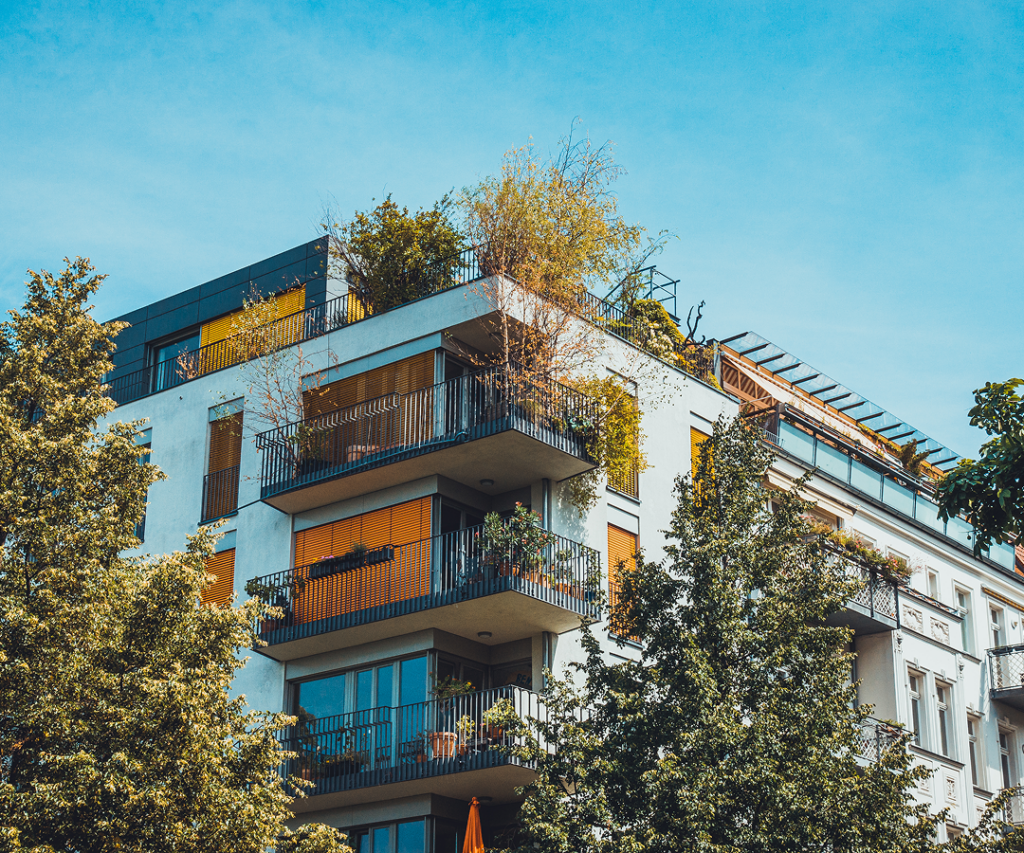
The practical question is inevitable: what do these global movements have to do with the Brazilian market and with the decisions of developers, funds and companies occupying large offices here?
The answer starts on the risk side. Assets that cannot demonstrate performance in health and quality of life have growing difficulty attracting corporate tenants that already have formal ESG commitments, and these tenants are becoming increasingly demanding. On the capital side, international institutional investors with exposure to the Brazilian market already use real estate ESG criteria when assessing portfolios. An asset without a recognized, validated health framework is, in practice, an asset with lower potential liquidity.
On the opportunity side, the benefits are equally concrete. Buildings that adopt the Fitwel methodology have a more solid argument for differentiated pricing, not as a sales promise but as verified data. Commercial differentiation is more defensible. Attracting and retaining high-value tenants is more predictable. And the ESG narrative stops being generic and becomes specific, measurable and auditable.
For companies occupying large offices, implementing the method in their spaces connects directly with talent attraction, organizational culture and the reporting of social indicators to stakeholders. It is no coincidence that Morgan Stanley, Fidelity Investments and Marriott appear among the projects recognized in 2026: they are companies that have understood that a healthy office is also an employer branding asset.
Conclusion: the cost of waiting
There is a pattern in the real estate markets that have become benchmarks in building health. Those that got there early did not do so because they had more resources: they got there because they made the decision before the market made it obvious.
In 2026, the window between “pioneer” and “standard” is closing. This year's Best in Building Health winners are not startups trying something new. They are BXP, Kilroy, Alexandria, Aldar, Tishman Speyer, Harrison Street: renowned players with decades in the market, which decided that healthy buildings are not a bet but a strategic position.
Vivo Eco Berrini in São Paulo shows that Brazil is on the map of this transformation. The question now is how many other Brazilian assets will be on that map in the coming award cycles.
Hygge: from strategy to implementation of the Fitwel methodology

Hygge specializes in structuring the Fitwel method within the launch and management strategy of high-end developments. We work so that the methodology's criteria and guidelines become a product argument, a sales narrative and a verifiable differentiator, for both the end buyer and investors and corporate tenants.
If your next project or portfolio does not yet have a structured building health strategy, now is the time to build one. Talk to Hygge.