LEED Certification
LEED: the world's most renowned and recognized certification can be part of your project too.
LEED-certified developments reflect a holistic approach to performance, sustainability and environmental care.
Who trusts us








Impact categories
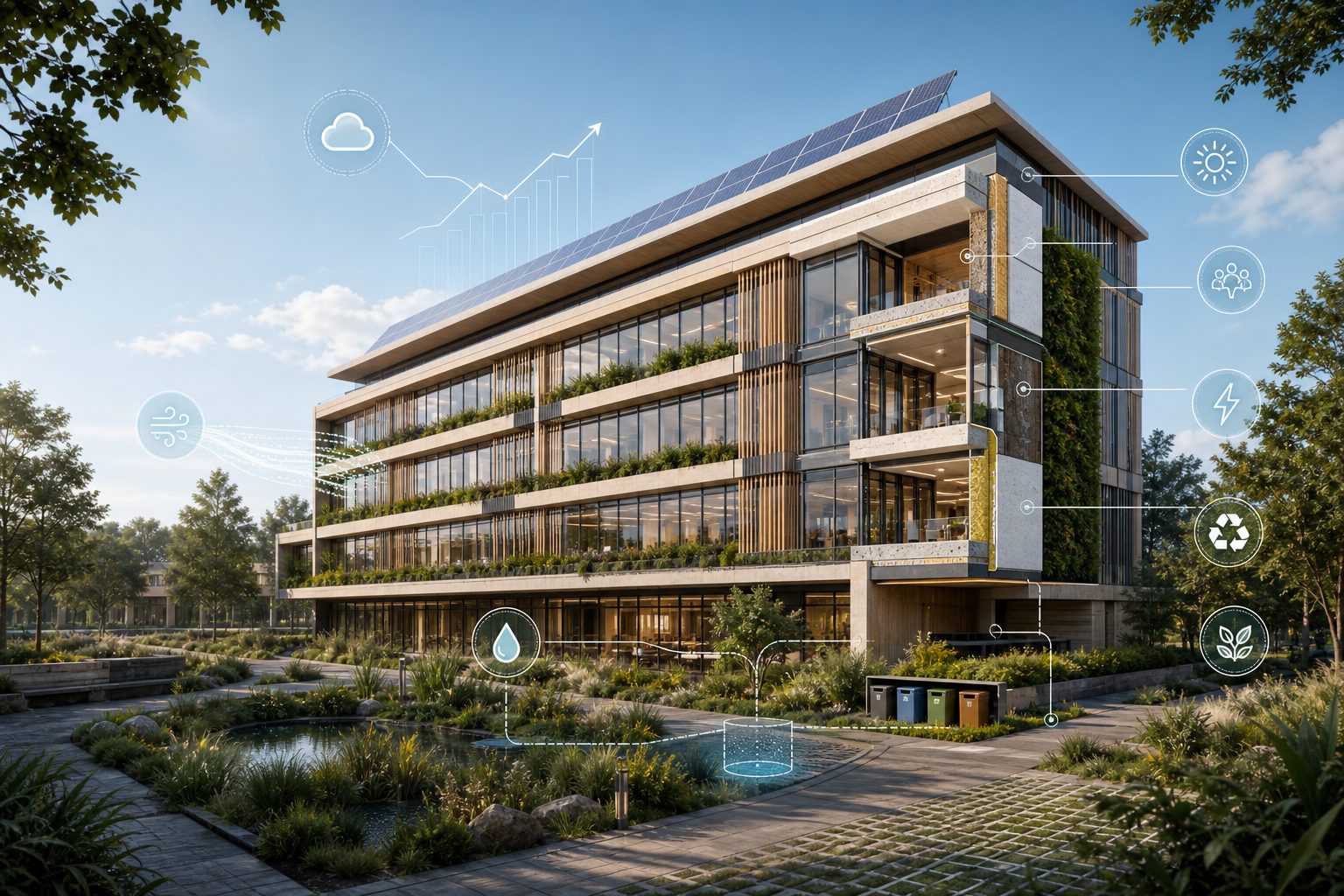
LEED assesses the impact of the whole building, not an isolated measure.
LEED (Leadership in Energy and Environmental Design) is the international certification created by the USGBC, United States Green Building Council, and administered by GBCI. The system recognizes projects that integrate environmental performance, health, efficiency and documentary governance.
- Decarbonization: energy, operational emissions, embodied carbon, electrification and renewables.
- Quality of life: health, comfort, indoor air, inclusion, resilience and occupant experience.
- Ecological conservation: water, biodiversity, materials, waste, site and environmental restoration.
- Governance: evidence, measurements, simulations, commissioning and third-party review.
LEED scoring
Prerequisites clear the path. Credits define the level.
USGBC
GBCI review
The certification combines mandatory prerequisites and scored credits. There are four levels of recognition: Certified (40-49 points), Silver (50-59 points), Gold (60-79 points) and Platinum (80 or more points).
What the scorecard assesses
LEED measures the building by categories, not by a single saving.
Location and transportation
Urban connectivity, access to services, transit, reduced car dependency and mobility strategy.
Site and development
Site impact control, runoff, heat islands, habitat, open space and the building's relationship with its surroundings.
Water efficiency
Indoor and outdoor consumption reduction, metering, water management and performance of water-using systems.
Energy and atmosphere
Commissioning, energy performance, metering, refrigerants, renewable energy and operational emissions.
Materials and waste
Environmental declarations, material sourcing, construction waste, circularity and embodied carbon in the newer versions.
Indoor environmental quality
Indoor air, thermal comfort, lighting, views, acoustics, low-emitting materials and occupant experience.
Hygge's work
+900
projects delivered
4
countries served
Talk to a specialist
The best result comes when LEED enters before decisions get expensive.
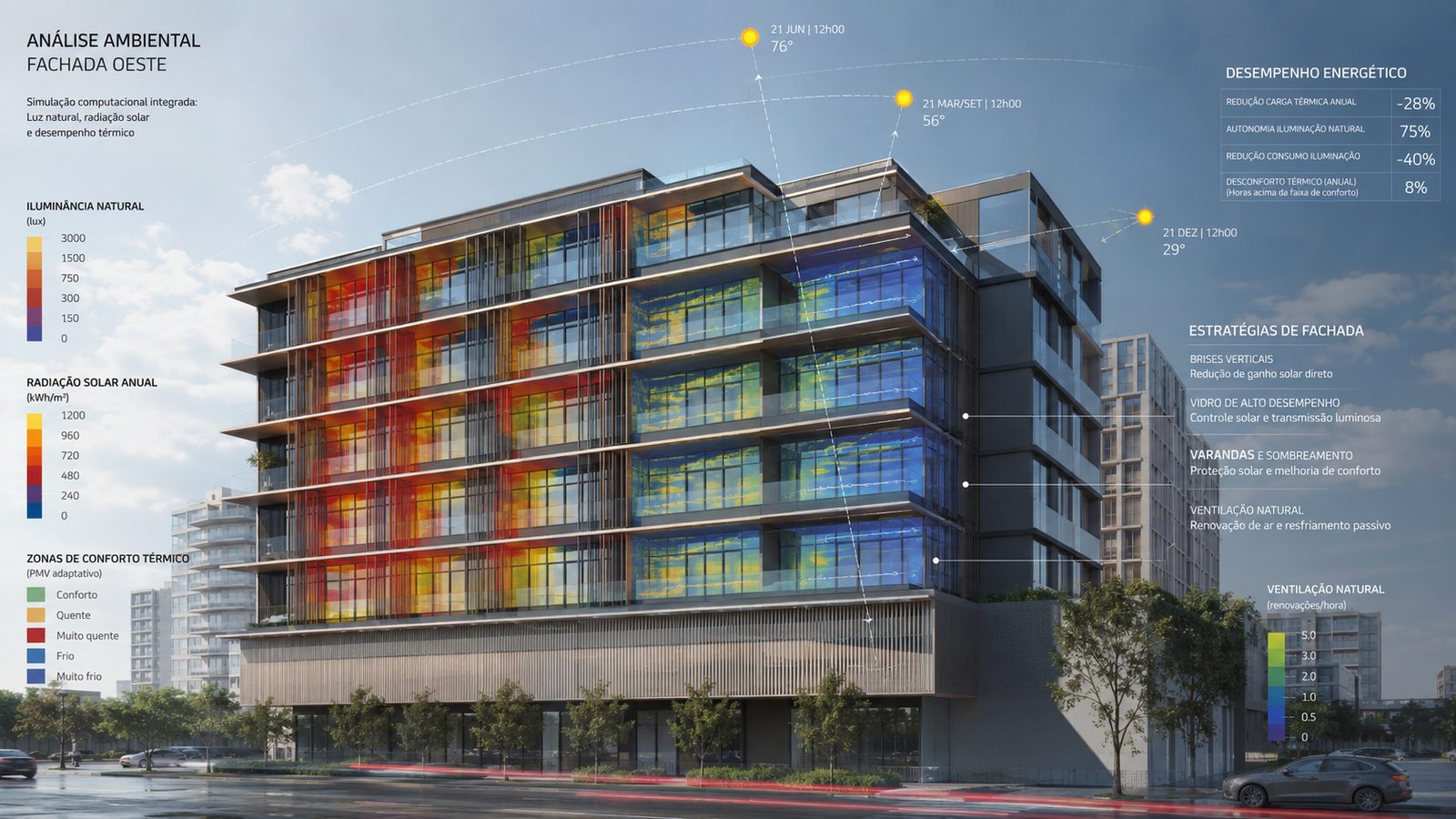
Hygge runs the pre-assessment, defines the version and rating system, builds the scorecard, identifies critical prerequisites, organizes target credits, guides the design disciplines, coordinates simulations and prepares the documentation for review.
Rating system
The right question is: which LEED rating system assesses this scope?
The rating system defines what falls within the certification. A whole building, a base building, a fit-out and an existing asset in operation are not assessed the same way.
I want LEED
The pre-assessment prevents choosing expensive credits before understanding the mandatory path.
In LEED, the target does not start at Gold or Platinum. It starts with eligibility, prerequisites, version, rating system, deadlines, existing documentation and the risk of each credit.
Schedule a pre-assessment
Frequently Asked Questions
The right questions come up before registration.
How does a project earn points in LEED?
First, it must meet all applicable prerequisites. Then it adds points from the credits chosen and accepted in review. The final score defines the certification level.
Does LEED help in conversations with ESG funds and investors?
Yes. LEED is an internationally recognized, third-party reviewed certification, which helps with ESG due diligence, communication with funds and comparison between assets. The certification does not guarantee fundraising or financing, but it organizes the evidence investors typically ask for.
Can I start with construction already underway?
It is possible in some cases, but the risk increases. We need to assess purchases already made, construction records, commissioning, air quality, materials, waste, measurements and evidence that may not be reconstructable later.
When is the best moment to start?
The best moment is before detailed design and before the main purchases. That way the scorecard guides site, envelope, systems, materials, commissioning and documentation without turning every credit into rework.
Is LEED v5 already mandatory?
For commercial projects, LEED v5 becomes the only option for new registrations on July 1, 2027, with limited exceptions. Until June 30, 2027, v4.1 can still be a valid route for many projects.
Does Hygge guarantee Gold or Platinum?
No. The level depends on the documentation accepted by GBCI. Hygge sets the target, strategy and safety margin, but does not promise a result before the pre-assessment and review.
Next step
Schedule a pre-assessment of the LEED path for your development.
We assess version, rating system, eligibility, critical prerequisites, likely credits, available documentation, simulation needs and an initial fee estimate.
Response time: 1 business day