

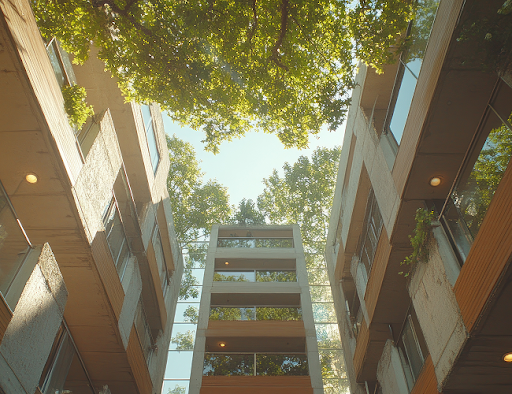
There comes a moment when a trend stops being a trend. It stops appearing in content about what is coming and starts appearing in purchase decisions, in tenant requirements and in the criteria of the funds that assess and shape real estate portfolios. With Wellness Real Estate, that moment has arrived.
The real estate market is going through one of the deepest transformations of recent decades, and surprisingly it has nothing to do with technology or location. It has to do with a far more human question: does the place where I live do me good?
It is from this question that Fitwel becomes relevant. Not as a technical agenda to be met, but as the framework that translates a real market demand into a concrete, verifiable and valued product.
The Wellness movement is not a niche: it is the new high-end
In recent years, the concept of well-being has expanded its territory. It is no longer synonymous with gyms and healthy eating and now includes everything that makes up the environment a person lives in: the quality of the air circulating at home, the natural light reaching their workplace, the shared space that encourages social connection.
This shift did not happen by chance. The pandemic accelerated what was already under way: people spend more time inside built environments than at any other time in recent history. And when you spend time inside a place, you start to notice what that place does to you.
This movement has a name and has data. Wellness Real Estate is now a segment tracked globally by the Global Wellness Institute and has grown consistently even through adverse economic cycles. The logic is simple: when health becomes a priority in people's lives, it also becomes a priority in deciding where to live. The built environment is no longer a backdrop and becomes part of the lifestyle. Developments that understand this are not just setting themselves apart: they are responding to a demand that already exists and will keep growing.
The result is a new buyer. More attentive to how a space feels. More demanding about experience. More willing to pay for a project that thinks of them as a person and not just as a sellable unit.
Wellness, in this context, is no longer a launch differentiator. It is the new standard of the high-end market.
What Fitwel is and why it is more than a certification
Fitwel was developed by the U.S. Centers for Disease Control and Prevention (CDC) in partnership with the General Services Administration (GSA) and is now operated by Active Design Advisors. It is the leading international methodology focused specifically on the health and well-being of building occupants.
The difference that matters: while most building rating systems focus on energy efficiency and environmental impact, Fitwel focuses on human impact. It asks: how does this development affect the health of the people who live or work here?
The method is based on a scorecard: a structured set of criteria that assesses everything from the development's location and access to open spaces to indoor air quality, the planning of shared spaces, access to healthy food and even the way stairs are designed to encourage their use. Every decision that favors occupant health earns points. The result is an index that quantifies something the market could feel but could not measure: how well a building takes care of the people inside it.
For multifamily residential developments (the context most directly linked to the development market), Fitwel assesses all areas and spaces of the building. Not just the common areas under the owner's control, but the complete living experience.
What makes Fitwel strategic (and not just technical) is the logic behind the scorecard: it does not impose a single design model. It maps what affects health and allows each development to build its own path toward more human environments.
People-oriented architecture: what changes in practice
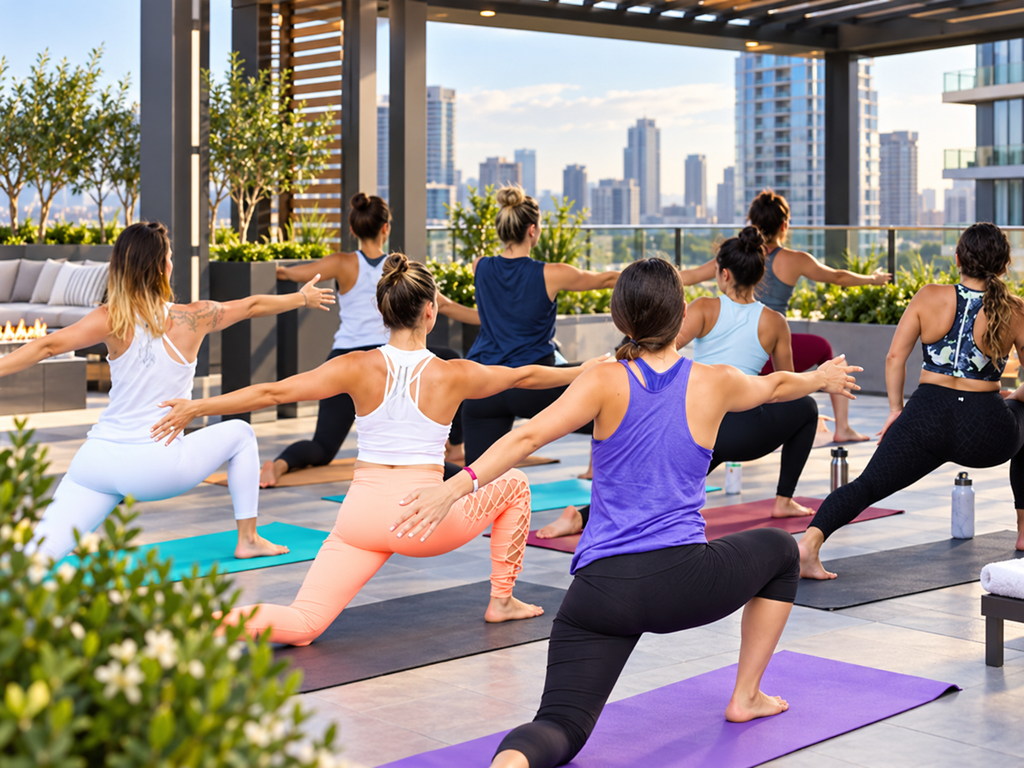
When Fitwel comes into the conception of a development, it changes the question asked during the design process. Instead of “how do we meet the minimum experience without disrupting the project's procedures too much?” the question becomes “how will this space behave for the people who live here?”
This changes concrete architectural and urban planning decisions and begins to shape Wellness Real Estate, or properties designed for well-being. Location is no longer assessed only per square meter and starts to be analyzed by access to parks, transport and health services. Shared spaces are designed to encourage social interaction, one of the main indicators of mental health and longevity. Indoor air quality and temperature and light control move out of the footnotes of the specifications and become central comfort criteria.
This change in mindset (from the project as a product to the project as a living environment) is what separates developments that deliver square meters from those that deliver experience.
Wellness: when well-being stops being a promise and becomes performance
In the real estate market, wellness can easily become an empty word.
A well-photographed gym, a few plants, cozy lighting and a list of services can build an attractive narrative. But they do not answer the most important question: does the development really offer better conditions for the people who will live in it?
It is this gap between intention and performance that Hygge seeks to close.
Hygge comes in as a partner specialized in performance engineering, supporting the technical assessment of the solutions that make the wellness concept real. Through simulations and design analysis, Hygge anticipates how spaces will really behave before the development is even built.
The analyses can consider metrics such as natural light, solar exposure, energy performance and thermal comfort. In practice, these simulations reveal aspects that do not appear in a launch image.
By defining each of these points at the design stage, Hygge tests alternatives, guides adjustments and increases the consistency between what is promised in communication and what residents will actually experience.
Why the home buyer has changed and what this means for the product

There is a quiet behavioral shift redesigning the real estate market. It does not appear in any single survey, but it is present in several at the same time.
The first sign is how long spaces are used. People spend more hours inside the places where they live, whether because of new ways of working or because a generation is aging and starting to value the home as a base for life, not just a dormitory between commitments.
The second sign is the attention people now pay to their own space. When you spend enough time in a space, you begin to notice how it affects your mood, your energy, the quality of your sleep and your relationship with the people around you. Comfort stops being abstract and becomes a matter of experience.
The third sign is demand. Younger and more sophisticated buyers come to the real estate product with references from hospitality, from high-end hotels and from well-designed coworking spaces. They carry an experience yardstick that the traditional residential product can no longer ignore.
The practical result is that developments designed with health and well-being criteria (especially when structured by a methodology such as Fitwel) can respond to this buyer far more precisely. And this translates into sales speed, the ability to sustain differentiated pricing and less exposure to pressure from price-per-square-meter comparisons.
Wellness Real Estate and ESG: two arguments that reinforce each other
For developers interested in institutional capital, real estate investment funds or international partnerships, Fitwel serves an additional function: it quantifies the S in ESG (the social component) as solidly as environmental indicators already do.
This is a point many managers still underestimate. While the environmental criterion (energy use, emissions, water management) already has established, recognized metrics, a development's social impact is still treated imprecisely. Fitwel solves this problem. It offers an auditable scorecard, based on scientific evidence, that objectively demonstrates how the development affects the health and well-being of the people who live in it.
For funds that need to report ESG performance, this ability to turn intention into verifiable data has direct value. An asset that can demonstrate its building health performance is not just well positioned commercially: it is structured to better withstand cycles of regulatory and market pressure.
What the global market reveals about what comes next

International data from 2026 confirm the maturity of the movement. The Best in Building Health award, an annual recognition given by Active Design Advisors to the projects making the greatest advances in building health, revealed a significant geographic expansion of Fitwel: projects recognized in the United Arab Emirates, Thailand, Canada, the United Kingdom, Costa Rica, Ireland and Brazil.
For the Brazilian market, this is a sign that what should be offered locally already has established implementation references and that the next growth cycle in the country does not depend on innovation, but on decision. This is the most relevant window right now. There is still room to get there before the method becomes an obligation. It is still possible to build a differentiator while the competition is still deciding whether to enter.
The pattern emerging from the global winners is revealing: the organizations advancing most are not those that applied the method to a pilot project. They are those that made health a policy, systematizing requirements, monitoring performance over time and renewing scorecards cyclically. Fitwel is no longer a launch initiative. It has become management practice.
Fitwel in residential: what changes from concept to construction site
A frequent question among developers coming to the subject for the first time: is Fitwel viable for Brazilian residential projects? Does it require a complete redesign? Does it raise costs too much?
The short answer is no. Fitwel was designed to be accessible and adaptable. It does not impose a single design model. It assesses what has already been decided and points out where there is an opportunity for improvement with real impact on occupant health. Many of the strategies that score well on the residential scorecard are design decisions any high-end development would already consider: good air quality, access to open spaces, integration with the surroundings, common area design that encourages interaction, materials that do not emit volatile organic compounds.
What Fitwel does is organize these decisions within an internationally recognized methodological framework, allowing them to become a verifiable product argument.
For the developer, this means three practical things: a more solid and differentiated sales narrative; an argument that withstands price-per-square-meter comparison; and an asset consistently positioned for investors who assess ESG criteria.
For the end buyer, it means something even more direct: a project designed for the way they live, not just for the way they buy.
Hygge: from strategy to implementation of the Fitwel method
Hygge specializes in structuring the Fitwel method within the launch and management strategy of developments: residential, commercial and mixed-use. We work so that the methodology's criteria become a product argument, a sales narrative and a verifiable differentiator for both end buyers and investors and funds.
If Wellness Real Estate is already on the radar for your portfolio or your next launch, the time to structure this positioning is before the project reaches the market. Not after.
Want to understand how Fitwel can strengthen your development's positioning? Talk to Hygge.

