


There is a question every developer has heard during a sales gallery visit, and it has changed in content without changing in form: “what is the property like?”
For decades, the expected answer was basically always the same. Floor area, location, finishes, number of parking spaces. Buyers came in with a list of functional criteria and left with a decision based on them. The property was a measurable and comparable asset.
This buyer still exists. But they now share the space (and are increasingly losing ground) with another profile, who asks the same question expecting a completely different answer. For this buyer, “what is the property like?” is a question about what their life will be like in that place. About how they will feel coming home after a long day. About whether the children will have room to move, whether natural light will come in during the morning, whether there will be silence when they need it.
This shift, from functional criteria to experience criteria, did not happen overnight. But the COVID-19 pandemic accelerated it irreversibly. When the property had to take on functions previously spread across the city, it became very clear what had been designed for life and what had been designed for the floor plan. And buyers who lived through this experience did not go back to their previous priorities.
Well-being in the real estate market is no longer a trend topic and has become a decision axis. And the developers who understood this first (not as discourse, but as product structure) are competing in a layer of the market where price and floor area have far less power over the final decision.
Well-being in property: what buyers have come to value and how it shows
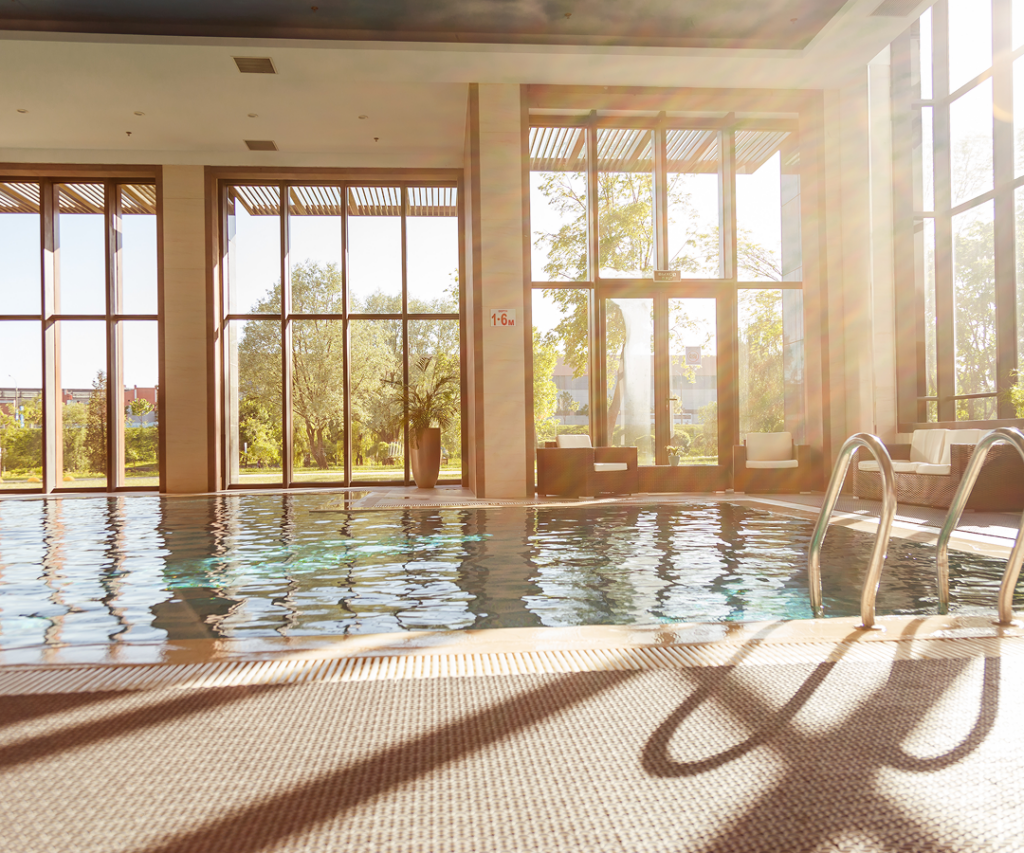
The change in the behavior of property buyers in Brazil is documented in data. Recent research indicates that attributes such as green areas, quality leisure and environments that support physical and mental health have gained growing prominence in decision criteria, going from desirable differentiators to baseline expectations in higher-income segments.
But the numbers describe what is happening. The more important question is: how does this show up in practice?
It shows up in the way buyers walk through a development during a visit. They are not just looking at the apartment. They are reading the ground floor: whether the entrance invites or merely exists, whether the transition between public and private space was thought through or merely resolved. They are assessing whether the common areas seem like places where they will want to be or sets staged for launch day. They are sensing whether there is natural light where it makes a difference and whether some element of nature breaks the hardness of the concrete.
All this happens before any rational argument comes into play. The decision process of a qualified buyer of a high-end residential development begins with the senses and only later moves to reason. The emotional anchor is planted in the common space, on the way in, in the feeling that the place was designed to welcome them, not just to impress them.
What buyers have come to value, in concrete terms, is the coherence between intention and execution. A gym with natural light and integration with a green area communicates something different from a basement gym with mirrors and artificial lighting, even if the equipment is equivalent. A corridor with a garden says something about the development that no brochure copy can say. A social space with proper shading and furniture that invites people to stay delivers an experience buyers will replay in their minds when imagining their life there.
This resident experience, built from the inside out through design decisions made with real intent, is what translates into property appreciation. Not as a promise, but as a perception verified at the moment the buyer is deciding.
Healthy environments: when the market created a structure for what used to be instinct
There is a recognizable moment in the evolution of any market: when something that existed as a perception also starts to exist as a methodology. When the intuition that “this development is better for the people who will live here” gains enough structure to be planned from the start, assessed with consistent criteria and communicated credibly.
That is exactly what happened with well-being in the real estate market in recent decades. The movement began in architecture (in firms already designing with attention to human scale, air quality and access to natural light) and moved into development as the market realized that these decisions had a direct impact on how people lived and, consequently, on the value they attributed to spaces.
There came a point when the market needed a common language to talk about something everyone already perceived, but few could structure consistently. How could “this development promotes well-being” be more than a positioning statement, and instead the result of a deliberate design process? How could the decision to integrate nature, encourage movement and ensure acoustic comfort and air quality stop depending on each architect's individual sensitivity and become part of the brief from the first sketch?
The answer was to develop methodologies that put these questions at the center of the process, not as an additional layer of complexity, but as guidance for decisions that had to be made anyway. The Fitwel method, operated by Active Design Advisors, is now a global reference in this field and a precise example of this movement: a framework that organizes into measurable criteria what attentive architects and developers were already doing by instinct: designing for people's real lives and not just for the building envelope.
What changes when a development is conceived within this framework is not only the final result. The process changes. The question “where will the green area go?” is no longer answered by whatever is left over on the site and is answered by where it will have the greatest impact on the resident experience: on which route, at what time of day, for what kind of use. The question about lighting stops being technical and becomes human: what feeling will this light create, at what time of day, for whoever is using this space?
These methodologies emerged because the market needed them: not to create new requirements, but to give structure to a demand buyers were already making, even without being able to name it.
Quality of life in property: what separates discourse from product
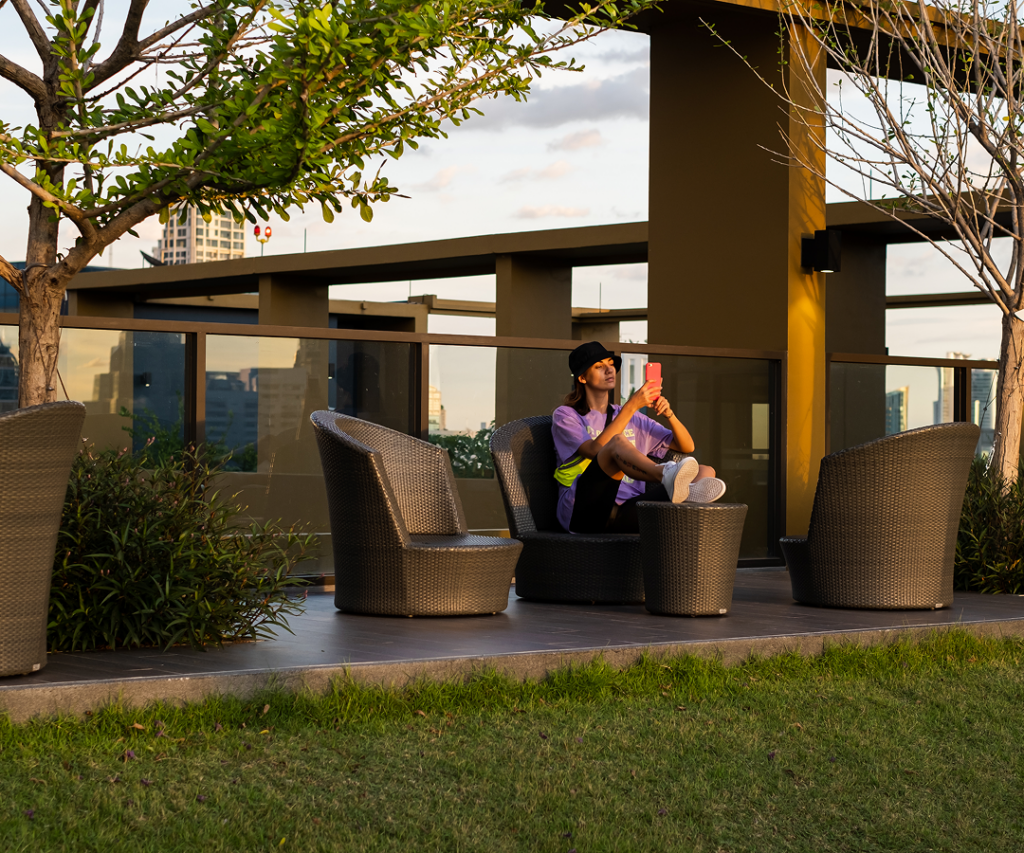
“Quality of life” has become one of the most used (and least precise) expressions in the real estate market. It appears in almost every brochure and in almost every launch speech. And precisely for this reason, it no longer works as an argument.
The qualified high-end buyer has heard this expression so many times that they have developed a very efficient filter: they no longer believe what is written. They believe what they feel when they visit the development, what they perceive as they walk through the spaces, what they experience even before reaching the apartment itself. And when what they feel does not match what was promised, the gap is immediately noticed, and rarely recovered during the rest of the visit.
This creates a real challenge for developers working with the theme of healthy property and well-being: the distance between promising quality of life and actually delivering it is visible. And the more sophisticated the buyer… the faster they detect this distance.
The difference between a development that talks about well-being and one that genuinely delivers it lies in the depth with which design decisions were made and in the coherence between those decisions. It is not about having a gym and a pool, since these exist at any competitor in the same segment. It is about why that well-being space was placed at that point, how it connects with the resident's natural route, how the lighting was conceived for different times of day and whether the sound of a conversation in one room invades another.
This coherence between intention and execution is what buyers feel, even when they cannot name it. It is what makes a development seem more expensive without any number having changed. And it is what makes property appreciation based on well-being lasting, sustaining pricing not only at launch but throughout the product's life cycle.
International methodologies for healthy environments in residential communities exist precisely to create this coherence in a structured, replicable way, so that “quality of life” stops being a brochure promise and becomes a set of verifiable decisions running through the entire design process, from the brief to the construction detail.
The evolution with no way back: well-being as a standard, not a differentiator
There is a recognizable path in the way product attributes move through the real estate market. It starts as a niche differentiator: something few offer and some buyers value. It moves on to a competitive differentiator: something that starts to appear in comparisons and to influence decisions consistently. And eventually it becomes a baseline expectation: something buyers assume will exist, and whose absence is read as carelessness.
Location has already gone through this entire cycle. So have high-end finishes. The question worth asking now is: at what point on this path is well-being in the real estate market?
Data from the Brazilian market in 2026 indicate that this movement is accelerating. Younger buyers, with broader repertoires and global references, come to the decision process with criteria that include acoustic comfort, air quality, the presence of nature and design that supports physical and mental health. For this profile, it is not a trend. It is the minimum expected of a product positioned as premium. The question is no longer “does this development have green areas?”, but “was this development designed for the way I live?”
Internationally, this movement has already reached maturity. Major developers and portfolio managers in markets such as the United States, the United Arab Emirates and the United Kingdom structure well-being in real estate as a product policy, not as a one-off experiment but as a commitment running through the entire asset portfolio. Brazil is at the beginning of this curve. And being at the beginning means there is still room to be a pioneer, to build a reputation and to make the commitment to quality of life in property part of a product's identity before the whole market does the same.
What is becoming increasingly clear is that developers who wait for this curve to complete before acting will find a market where this attribute is no longer a differentiator and has become an obligation. Those acting now are building something different: a positioning that buyers perceive, that competitors take time to replicate and that time will only validate.
Conclusion: the question every launch should be able to answer
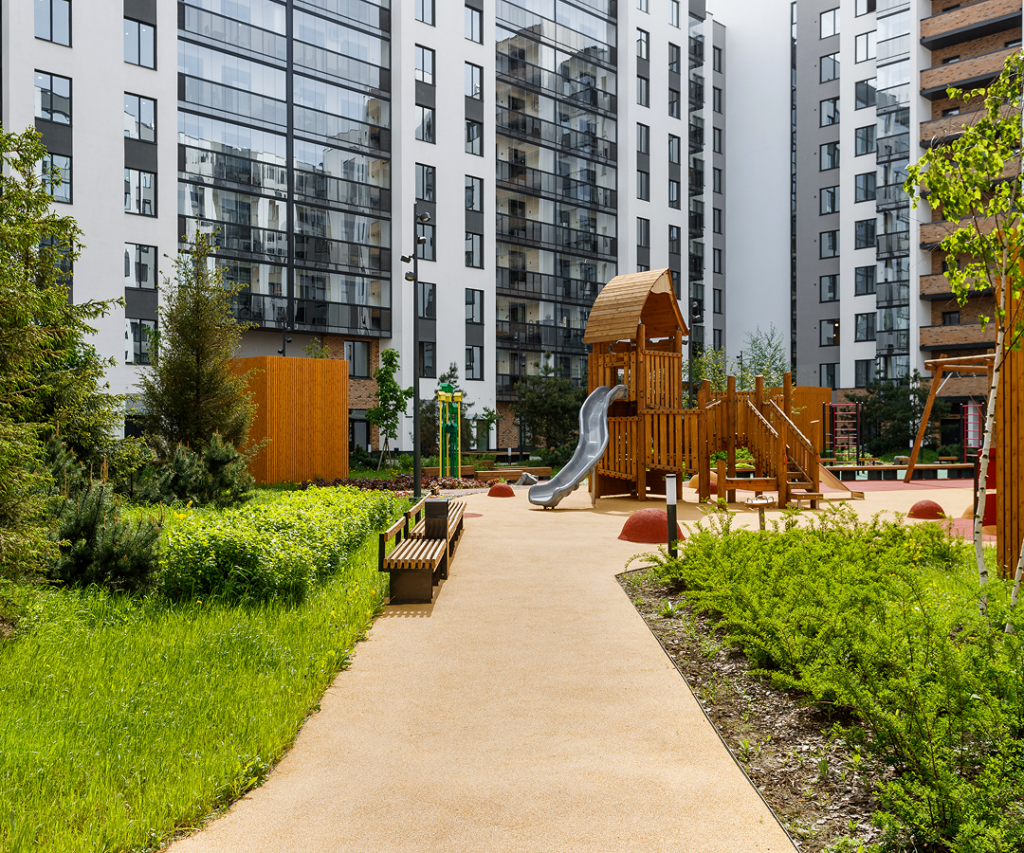
Before defining the program, site plan or finishes, every high-end residential development should be able to answer a simple question: how will this place affect the lives of the people who will live here?
Not as a thought exercise. As a design criterion. As guidance for every decision that follows.
The behavior of property buyers is changing in a structural, not cyclical, way. And the market is creating (with growing sophistication) the tools for this change to translate into a design process and not just a sales pitch.
Developments that can answer this question, not with words but with experience, will have an advantage no square meter comparison can erase.
Hygge: Fitwel certification applied to your development
Hygge specializes in implementing Fitwel certification in developments, translating international well-being criteria into concrete design decisions, sales arguments and verifiable value for the end buyer.
If your next launch does not yet have a structured quality-of-life strategy, now is the time to build one. Talk to Hygge.