


Every residential development built in Brazil must comply with NBR 15.575. This is not news. What still surprises many engineering teams is finding out (too late) that the report they commissioned does not work for the CAIXA audit, communicates nothing to the development team and has to be redone before construction ends.
The standard is the same for everyone. The report is not.
NBR 15.575, known as the Performance Standard, sets minimum requirements that residential buildings must meet in terms of structure, safety, habitability and sustainability. In the context of social housing and developments seeking the CAIXA Selo Azul, two items account for part of the technical audit requirements: thermal performance and lighting performance, assessed respectively under items 2.2 and 2.3 of the CAIXA checklist. The problem begins when this process is treated as an administrative step rather than a technical decision.
What NBR 15.575 requires
The housing performance standard defines criteria, not design methods. It does not prescribe how to build, but it sets out what the built environment must deliver to the people who live in it. This includes minimum conditions of thermal comfort, natural illuminance levels per room and how the building behaves under different climate conditions throughout the year.
Two methods are provided for proving performance: the prescriptive method and computer simulation. Since 2025, the prescriptive method is no longer accepted for lighting performance, which makes energy simulation the only viable path to complete reports accepted at audit.
The market has not yet fully absorbed this change. Many teams reach the approval or audit stage with reports prepared using an inadequate method, which leads to rework, delays and, in some cases, makes CAIXA financing unfeasible.
The simulation-based report is no longer a premium option. It is the minimum accepted standard.
NBR 15.575: why the timing of the report defines the result
A frequent question among developers and project coordinators is: when should the report be commissioned? The direct answer is that there are four critical stages, and each one generates a different kind of value.
- Design study: this is the moment of greatest impact. Decisions on solar orientation, opening sizes, glass type, spacing between towers and solar protection directly affect thermal and lighting performance. Identifying problems here costs far less than fixing them on site.
- City approval: the report adjusts the technical documentation and reduces conflict between the legal design and the performance requirements, avoiding demands during the review.
- CAIXA audit: this is the stage at which the report must be structured for objective reading, which in the case of the CAIXA Selo Azul means items 2.2 and 2.3. Poorly organized technical material, or material with gaps, compromises the audit, whether or not the design meets the standard.
- Architectural coordination: when conflicts between disciplines can still be corrected before construction, the report works as a preventive assessment, avoiding stopgap solutions on site, which tend to cost more and solve less.
The earlier the report comes into the process, the lower the risk and the better the technical use of the information generated.
How the energy simulation report for NBR 15.575 works
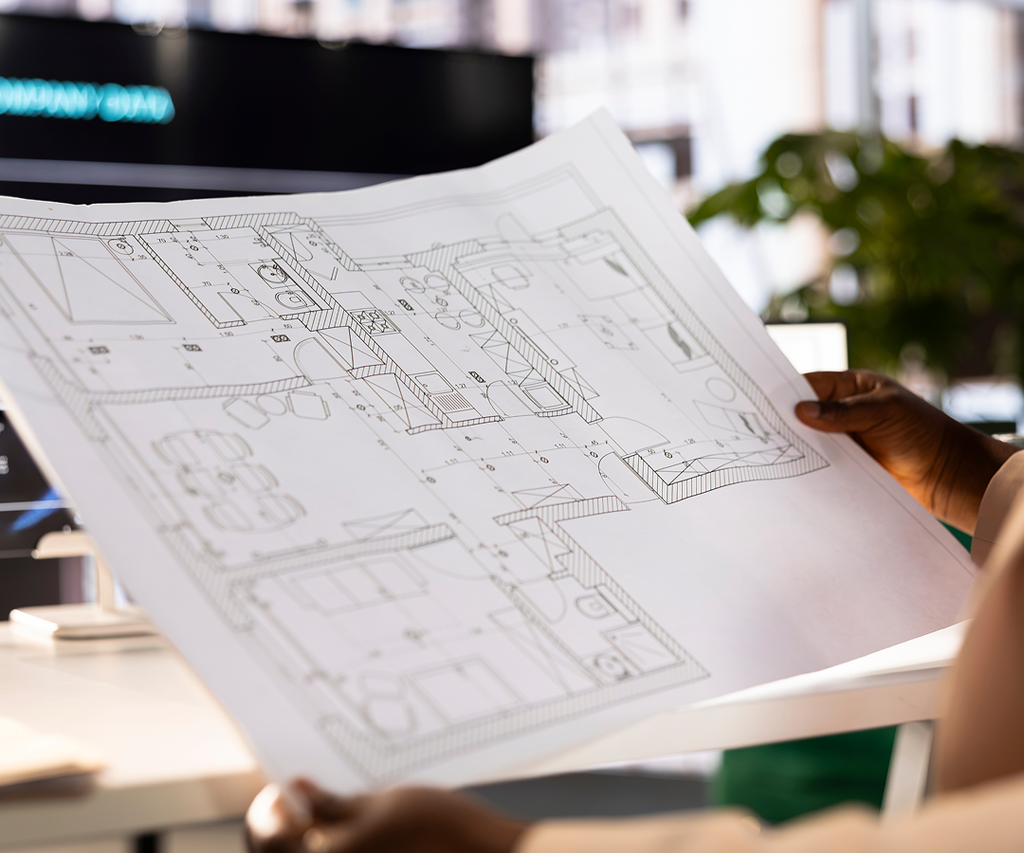
The NBR 15.575 computer simulation report models the real behavior of the building in specialized software, considering variables such as geographic location, solar orientation, material characteristics, opening geometry and historical climate data for the region.
The result is not an estimate. It is a quantified reading of how each room in the development behaves thermally and how much natural illuminance it receives throughout the year.
For thermal performance, the central indicator is PHFT (percentage of occupied hours within the comfort temperature range). In the example of a platform dashboard structured for executive presentation, an average PHFT of 76.9% means that the room in question stays within the comfort range for more than three quarters of the year. This figure can be read immediately by both engineering and the development team.
For lighting performance, the check considers natural illuminance per room (measured in lux) and compares it with the minimum values required by the standard. A reading of 783 lux in a specific room, for example, is a verifiable, traceable figure that can be presented at audit.
Simulation turns the design into evidence. And evidence is what supports the report: in engineering, at CAIXA and at the sales table.
The mistake that compromises the NBR 15.575 report before delivery
The most common mistake is not in the simulation. It is in the scope.
Many companies offer sample-based reports in which only a fraction of the units or towers is simulated, and the result is extrapolated to the rest of the development. This model reduces cost, but it introduces a risk that stays invisible until the audit: CAIXA may question how representative the sample is, and the developer then has to expand the scope in a hurry.
Another critical point is the separation between the technical report and the communication of the result. A document produced exclusively for engineers does not reach the development, sales or marketing teams in a usable format. As a result, the development's performance (which could be a sales argument) stays locked in a spreadsheet that nobody outside the technical team can read.
The technical report and executive communication are not separate deliverables. They are two readings of the same data.
What the market has already understood and what it is still learning about NBR 15.575
The number of developments seeking the CAIXA Selo Azul is growing as housing finance expands and performance requirements become established. MRV, Direcional, LYX and other large-scale developers have already adopted the energy simulation report as a standard step in the process, not as a response to a requirement, but as protection against rework and as an argument for the audit.
What is still being absorbed is the understanding that the report has value beyond the standard. When well structured, it generates data that supports design decisions, strengthens the development's sales narrative and documents performance traceably throughout the asset's life cycle.
In a market where international certifications such as Fitwel, EDGE and LEED are gaining ground in the high-end segment, NBR 15.575 is the mandatory technical floor, and treating it as a ceiling is a strategic mistake that more structured developers have already left behind.
NBR 15.575 done well: from simulation to sales argument

NBR 15.575 is not a standard you simply comply with. It is a framework that, when activated at the right moment in the project, organizes decisions, reduces risk and generates information that runs through the entire development chain, from engineering to audit and from the development team to the sales team.
A simulation-based report is not a compliance cost. It is the document that proves the design works before construction begins.
Developments that treat performance as verifiable data, and not as a design promise, reach the audit better prepared, the market better positioned and operation with fewer surprises. This is the standard the regulation allows, and one that most reports still do not deliver.
Hygge: an NBR 15.575 report that works for engineering, CAIXA and sales
Engineering teams that need an NBR 15.575 report valid for the CAIXA audit often face the same problem: a technically correct document that nobody outside the technical environment can read, and that arrives too late to change any design decision.
Hygge structures the NBR 15.575 report through computer simulation with 100% of the towers simulated, dedicated analysis of items 2.2 and 2.3 of the CAIXA Selo Azul, a 3D platform with room-by-room reading and a sales book, so that the result reaches the development, marketing and sales teams clearly. Turnaround of up to 10 days for the standard scope. More than 900 projects delivered, with clients such as MRV, Valor Real, Direcional and LYX.
If your development is at the design, coordination or audit stage, now is the time to structure the report. Request a proposal.

